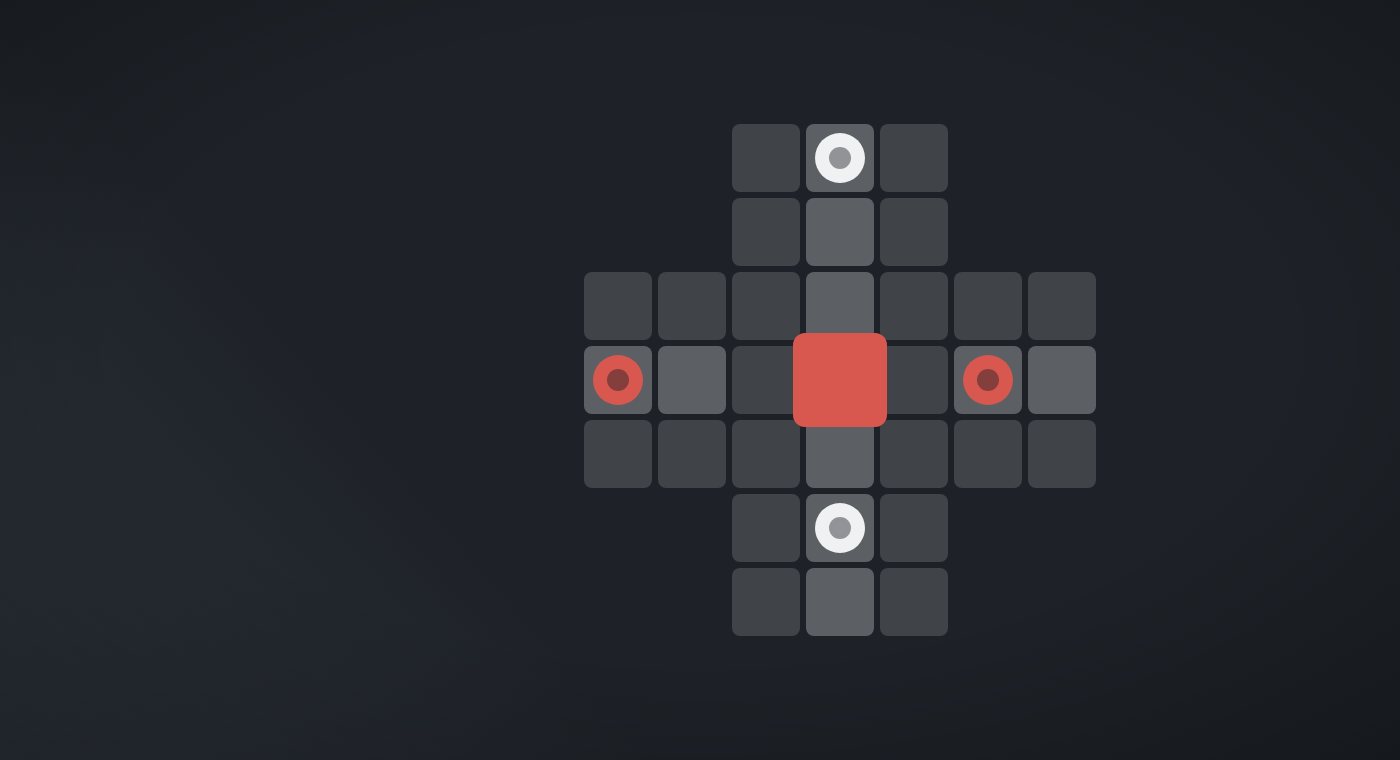
The Ludo endgame has a specific trap, and almost everyone falls into it at least once: being clearly ahead, reaching the home column with three tokens, and then watching an opponent overtake while you wait for an exact number that will not come.
The exact roll problem
In standard rules the final square requires an exact count. A token needing a three enters on a three and nothing else.
The probability of any specific number is 1 in 6 per turn. The expected wait is six turns. But expected is not typical — the chance of waiting twelve or more turns for a specific number is about 11%, which across four tokens means it will happen to you regularly.
The principle: keep your distances spread
This is the whole endgame in one sentence.
If three tokens all need a two, only a two helps you and five rolls in six are wasted. If your three tokens need a one, a three and a five, then three rolls in six advance something — half your turns are useful instead of one sixth.
The practical consequence: resist pushing tokens deep into the home column early. A token that is six squares out has every roll available to it. A token that is one square out has only a one.
Sequencing the final approach
A workable order of operations:
- Bring all four tokens into the final stretch before perfecting any of them. A token still on the main track is capturable; a token in the column is safe but inflexible.
- Stagger the column entries. As tokens arrive, place them at different depths rather than pushing each one as far as it will go.
- Finish from the deepest first when exact rolls allow, which naturally keeps the remaining spread wide.
- Keep one token flexible — several squares out — as a sink for rolls that nothing else can use.
The danger zone on the main track
The last stretch before your home column turn-off is where endgame losses happen. Your tokens are converging on one point, which means they bunch together, which means opponents can reach several of them with one good roll.
Two defences: time the approach so tokens arrive separately rather than together, and use the safe squares near the turn-off even if it costs a turn. A token sent home from three squares short of the column has lost an entire circuit.
When you are behind
Different rules apply. If an opponent has three tokens home and you have one, playing safe guarantees a loss.
Switch to disruption: park tokens behind their remaining pieces, accept exposure, and take captures that would be bad trades in a close game. Sending one of their tokens back a full circuit is worth more than any progress of your own at that point.
The three-sixes trap
Where the forfeit rule applies, rolling three consecutive sixes loses the turn. In the endgame, when you may be counting on a six to move a distant token, this stings. It happens about one turn in 216 — rare, but it reliably happens at the worst moment, and it is worth knowing it is a rule rather than a glitch.
The summary
Ludo’s endgame is not about speed. It is about keeping as many of the six possible rolls useful as you can, for as long as you can. The player who arrives home second but never wasted a turn usually gets there first.